
Tag: ai

Multi-agent orchestration - the complexity trap
Multi-agent AI systems promise specialized intelligence but deliver exponential complexity. Salesforce research shows agents achieve only 58 percent success on single tasks and adding orchestration doubles the failure rate. Most mid-size companies need one capable agent, not coordinated swarms.

Open source vs proprietary AI models - why free costs more
Open source AI models look free until you add infrastructure, staffing, and maintenance. With RAND Corporation noting in its August 2024 report that by some estimates over 80 percent of AI projects fail, most mid-size companies find proprietary solutions cost less overall.

Support beats features every time - the real ai vendor evaluation checklist
Most AI vendor evaluation checklists obsess over model capabilities while ignoring what actually determines success: whether the vendor picks up the phone when your implementation breaks at 3am. RAND Corporation research shows more than 80% of AI projects fail, and 85% of companies miss AI cost forecasts by more than 10%.

AI budget template - plan for iteration, not implementation
Traditional project budgeting assumes you know the outcome before you start. AI budgeting assumes you will discover the outcome through iteration. RAND research shows more than 80 percent of AI projects fail because of this mismatch. Here is a practical framework mid-size companies can use to budget for AI projects without setting money on fire.

AI contract negotiation - why flexibility beats price
85 percent of companies miss their AI cost forecasts by more than 10 percent, and the cheapest AI contract often becomes the most expensive. Flexible terms around usage scaling, data portability, and exit rights matter more than base pricing. What Michael Porter called switching costs are the real danger in AI vendor lock-in.

AI legacy integration - the 80% problem that kills projects
AI adoption hit the vast majority of organizations, yet only a handful have fully scaled. RAND Corporation research shows more than 80 percent of AI projects fail, and the gap traces back to legacy system integration. Data preparation alone consumes 50 to 70 percent of project effort. Here is how to bridge that gap without replacing your entire tech stack.

AI migration playbook - making transitions invisible
The best AI migrations are invisible to users. Capital One cut transaction errors by half during their AWS migration using blue-green deployment, canary rollouts, and phased transitions. Practical guidance on pre-migration testing, risk mitigation, and rollback procedures that keep your team productive throughout the change.

AI RFP template that tests capability, not credentials
Most AI RFPs collect marketing slides instead of testing real performance with your data. RAND found more than 80% of AI projects fail, often because procurement focused on credentials rather than capability. Here is a practical approach that evaluates vendors through hands-on proof of concepts using your actual data and workflows, not polished presentations.

API-first AI architecture - why APIs are the UI for AI
The best AI model is useless with a poorly designed API. Roy Fielding REST patterns break down when AI costs are variable and outputs non-deterministic. With a large share of agentic AI projects getting cancelled over cost and complexity, API-first architecture determines adoption more than model performance.

Cache the prompt, not the response - why most LLM caching fails
Your LLM API bills are eating your budget because you are caching the wrong thing. Most teams cache responses when they should cache prompts. Prompt caching reuses processed context instead of reprocessing it every call, so cache reads cost a small fraction of the standard rate. Anthropic reports up to 90% off.

Claude API rate limits for enterprise - the real numbers and how to optimize
Most enterprises hit Claude rate limits within days of launch. The real challenge is not the limits themselves - it is understanding how token buckets work and optimizing around continuous replenishment instead of fixed resets. Caching, batching, and tiered access are what actually work.

Claude Code SOC 2 compliance - what your auditor needs to know
Your auditor does not care about Anthropic marketing promises or vendor certifications alone. They need evidence of YOUR controls around Claude Code, data handling documentation, and audit trails that prove your AI coding tool is not creating compliance gaps in your SOC 2 framework. IBM found 97% of AI-breached organizations lacked proper access controls.

Claude Code vs Amazon Q Developer - why AWS shops are switching
Your team runs on AWS with Enterprise Support credits making Amazon Q Developer seem like the obvious choice. But when developers actually test both tools, they keep switching to Claude Code. The 1 million token context window versus 200K, code quality improvements, and better handling of complex legacy codebases make the decision clear despite AWS integration advantages.

Claude for developers: beyond code generation
Code generation was never the real bottleneck. Claude for developers excels at code review, architecture discussions, and debugging conversations. Teams report 164% productivity gains from these collaborative thinking tasks, not from typing faster, but from thinking more deeply about system design.

Claude on Vertex AI vs native Anthropic - hidden differences that matter
Your team runs on Google Cloud, so Vertex AI seems like the obvious choice for Claude. But that assumption delays feature access by weeks, adds regional endpoint pricing premiums, and increases total ownership costs without delivering corresponding value.

Claude Projects for team collaboration - the honest guide
Your team uses Claude but everyone has different prompts and context. Claude Projects by Anthropic treats AI as shared working memory, not documentation that goes stale. A Microsoft case study found most new developer tasks involve relearning things someone already knows.

How to get major AI credits from the Anthropic VC partner program
Most startups do not know they can access major AI credits through the Anthropic partner network. The company now serves over 300,000 businesses. This guide covers how the program actually works, who qualifies, and why rate limits and technical access often matter more than the credit amount itself.

Intelligent process automation vs RPA: the real difference
RPA breaks with every UI change while intelligent automation adapts. RAND Corporation research shows more than 80 percent of AI projects fail. When maintenance eats a large share of total RPA costs, self-healing systems and long-term adaptability matter far more than quick implementation wins.

Managing prompts in production
Your prompts are code. Treat them like it. LaunchDarkly found that teams lose hours figuring out which prompt version runs in production. Here is why version control, testing, and deployment pipelines matter more than writing perfect prompts.

One prompt pattern, ten different jobs - why reusability matters more than perfection
Vanderbilt University research treats reusable prompt patterns like design patterns in software - build once, reuse everywhere. Three core patterns cover customer service, data analysis, documentation, and seven more business functions.

RAG vs fine-tuning: The decision that actually matters
Research across twelve language models shows RAG vs fine-tuning is not about which is better. It is about data freshness, team capacity, and whether your knowledge changes daily or yearly.

Real-time AI streaming - perception beats technical perfection
Most companies over-engineer real-time AI systems by focusing on technical latency instead of user perception. Research by Jakob Nielsen confirms the difference between 50ms and 200ms response time rarely matters to users, but infrastructure complexity differs enormously. Here is how to build streaming AI that feels instant without breaking budget constraints.

Rule based to AI migration - hybrid beats replacement
Why gradual evolution using hybrid rule-AI systems succeeds where full replacement fails. An MIT study found 95% of generative AI pilots fail to deliver returns, yet most companies approaching rule based to AI migration still waste months ripping out working systems when the smart move is running both in parallel.

The AI failure post-mortem template
MIT research shows 95% of generative AI pilots fail to achieve results. When they do, most companies bury failures instead of extracting lessons. A structured post-mortem process paired with proper iteration budgeting turns project failure into organizational knowledge that prevents repeating mistakes.

The AI governance framework template that enables instead of blocks
Stop choosing between innovation and business risk. Most governance frameworks create bureaucracy that kills progress, and IBM data shows 63 percent of breached organizations lack AI governance policies. Here is a practical template that enables AI teams while managing actual risks.

The $0 productivity upgrade most developers miss
Your Mac and Linux machines come with grep, find, and cat - tools from the 1970s. Modern alternatives like ripgrep and fd run 10-100x faster, output JSON for AI workflows, and install in 30 minutes.
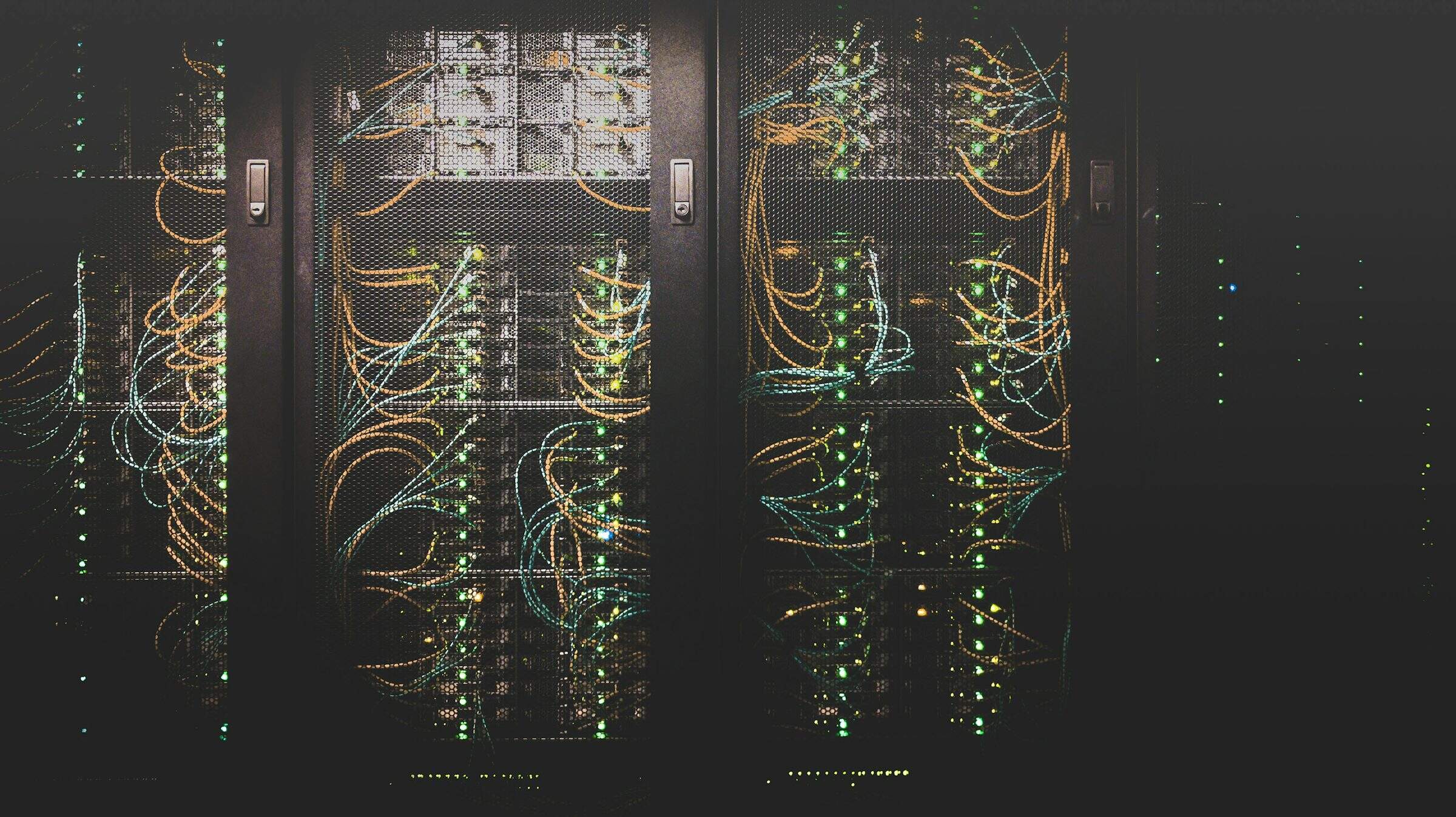
MCP server development cost - what enterprises actually pay for custom Claude integrations
Building an MCP server varies dramatically in cost depending on complexity. Simple database connectors take 2-3 weeks while enterprise integrations require 8-12 weeks. The real challenge is finding experienced developers who understand the protocol well enough to guide implementation decisions, even now that MCP is widely adopted.

Migrating from GitHub Copilot to Claude Code - a 30-day roadmap for development teams
Moving your team from GitHub Copilot to Claude Code requires planning to handle the 19 percent initial productivity dip. This 30-day roadmap minimizes disruption while capturing the terminal-native agentic workflow and the reasoning gains that let developers handle complex refactoring in hours instead of days.

AI cost optimization - why architecture beats prompt engineering
Most companies start AI cost optimization in the wrong place. AWS research shows architectural changes cut costs by 60-90% while prompt engineering saves 20-30% at best.

Event-driven AI - building composable AI systems
Event-driven architecture turns AI from rigid monoliths into flexible, composable services that evolve independently. Research shows event-driven systems respond 19% faster with 34% fewer errors. Kafka, sagas, and CQRS patterns enable AI systems built like Lego blocks rather than concrete foundations that become impossible to modify.